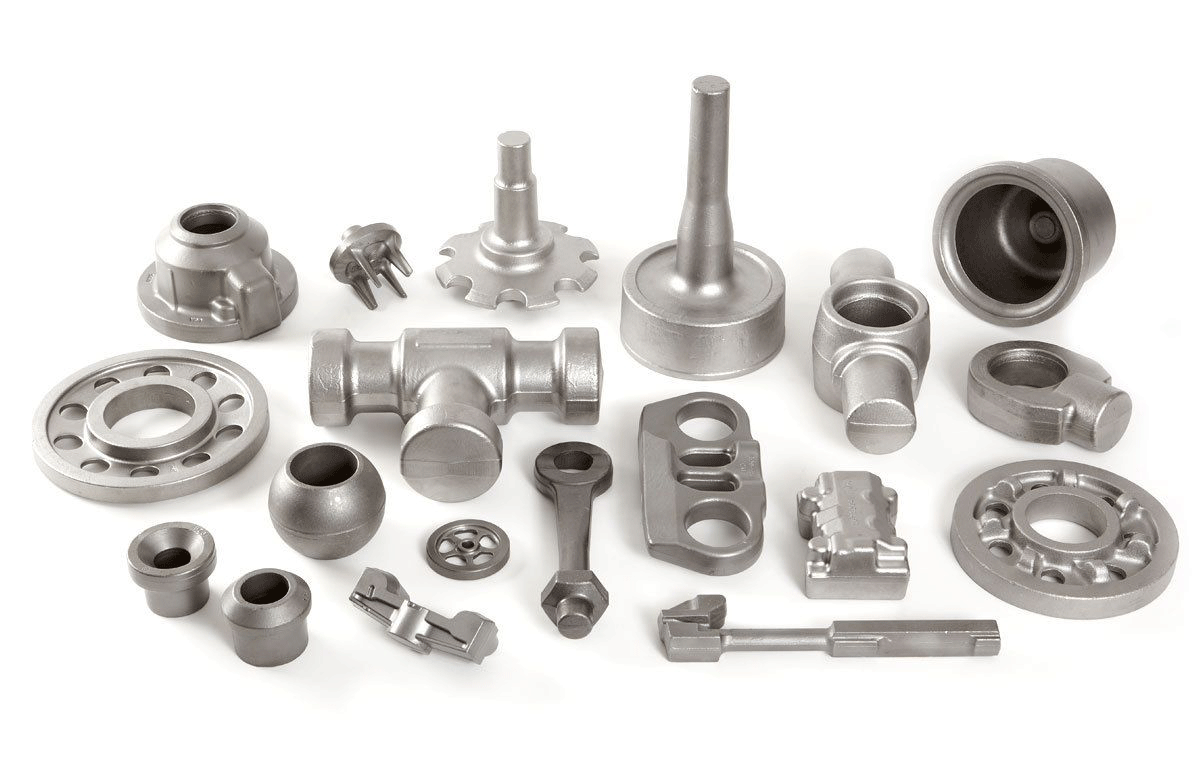
Forging
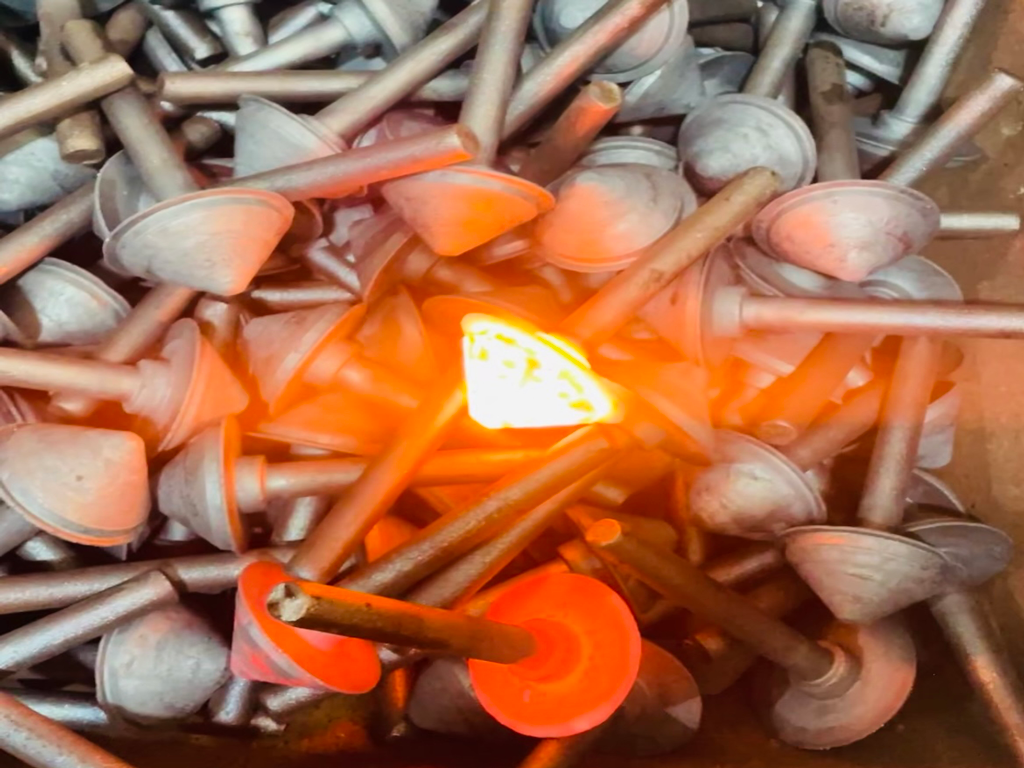
Forging barstock parts involves shaping raw metal bars into finished components by applying intense pressure, which aligns the metal's grain structure for enhanced strength and durability. The barstock is first cut to size, heated (or forged cold), and then subjected to methods like hammering or pressing it between dies to form the desired shape. This results in strong, high-integrity parts like gears, bolts, and automotive components, often with minimal waste.
Process overview
- Preparation: Raw barstock, which is typically cylindrical or square, is cut into billets of the required length.
- Heating: For hot forging, the billets are heated to a pliable, but solid, state to reduce the force and energy needed for shaping. Cold forging uses room temperature metal.
- Shaping: The heated or cold metal is shaped using various methods:
- Open-die forging: Metal is shaped between dies that don't completely enclose it.
- Closed-die forging: The metal is forced into a die cavity that contains the shape of the final part.
- Upset forging: The cross-sectional area of the bar is increased by hammering or pressing one end, often used for fasteners like bolts and nuts.
- Roll forging: The bar is passed between grooved rolls to reduce its thickness and increase its length.
- Finishing: After forging, excess material called "flash" is trimmed away, and the part may undergo additional processes like heat-treating or machining.
Key characteristics
- Enhanced strength: Forging compresses the metal, refines its grain structure, and creates an uninterrupted grain flow, which makes the final parts very strong and resistant to fatigue and impact.
- High integrity: The process eliminates voids, leading to a more reliable and structurally sound component compared to other methods like casting.
- Versatility: It can be used to create a wide range of complex shapes and is a common method for producing parts for automotive, aerospace, and industrial machinery.
- Cost-effective for high-volume or high-stress parts: While initial tooling costs can be high, forging is often cost-effective for high-volume production of high-strength parts where the benefits of improved material properties justify the investment.
Forging